Quarterly perimeter pest maintenance functions by intercepting pests outdoors before nesting occurs in heated wall voids or damp subfloors. In Davidson County, seasonal temperature swings drive targeted insect…
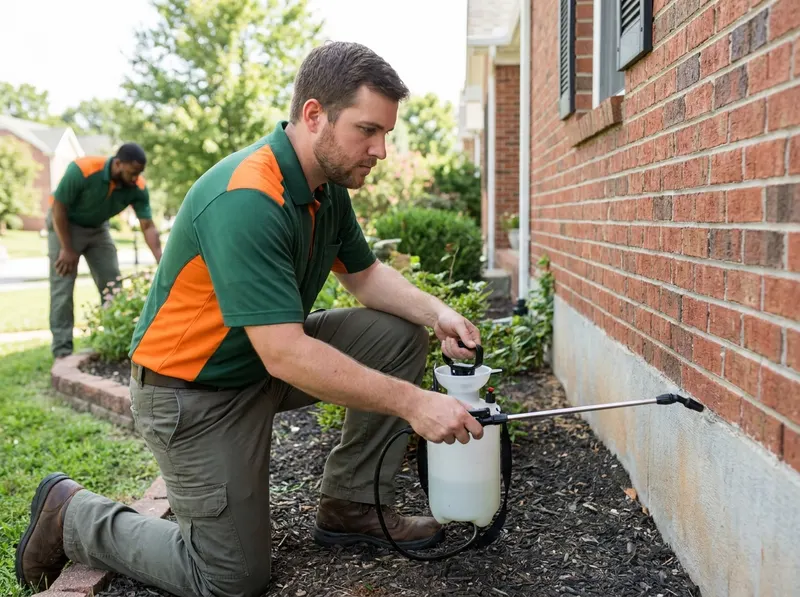
Quarterly perimeter pest maintenance functions by intercepting pests outdoors before nesting occurs in heated wall voids or damp subfloors. In Davidson County, seasonal temperature swings drive targeted insect migrations. Spring increases subterranean termite swarms and odorous house ant foraging near plumbing lines. Humid Nashville summers elevate brown recluse hunting activity in dry attics and crawlspaces, while autumn drops in temperature drive Norway rats and house mice inward seeking shelter. A quarterly service rhythm aligns chemical degradation timelines with these biological shifts, as exterior synthetic pyrethroid and microencapsulated barriers naturally break down after 60 to 90 days under Middle Tennessee rainfall and high UV exposure.
Older construction in historic areas like Germantown, Belmont-Hillsboro, and East Nashville often features stacked limestone foundations and pier-and-beam crawlspaces. These structural designs harbor high soil moisture and provide direct entry fissures for pests. Newer builds with concrete slab foundations in The Nations or expansive estates in Green Hills, Belle Meade, and Sylvan Park encounter different vulnerabilities, such as weeping holes in brick veneers and mulch beds installed directly against exterior siding. Quarterly barrier applications treat the soil-to-structure transition zone, addressing local moisture pockets near Radnor Lake State Park and Shelby Bottoms Greenway where pest populations run naturally dense.
Choosing quarterly prevention over one-time emergency eradications shifts property management from reactive poisoning to structural perimeter protection. One-time spot treatments eliminate visible clusters inside kitchens or living spaces, yet fail to neutralize satellite colonies resting in crawlspaces or landscape timbers. The trade-off between quarterly programs and monthly services is chemical volume versus biological need: monthly exterior applications often deposit excess residual chemical without added efficacy, whereas a 90-day interval maintains continuous repellent thresholds without over-application around domestic pets and children. Homeowners retain flexibility without mandatory 12-month auto-renewing billing locks, as ongoing service operates on clear seasonal approvals.
Every job gets a firm, written price after a free on-site visit.
Tell us about your quarterly pest prevention job in Nashville and we'll send a clear, written quote, usually the same day.
 Praxira Pest Experts